
Anarkistic
ClioSport Club Member
Clio RS 172 Ph1
I am officially at the end of my automotive electrical knowledge and don't appear to figured out the answer, so I thought it best to consult the hive mind!
Quick history. 172 Ph1 (2000 year). Car started and ran fine. Left it for a month or so over winter (connected to a trickle maintainer). Went to start it....cranks fine but no fuel. Can't hear the relay clicking or the pump priming. Relays are all tested and working 100%.
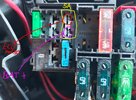
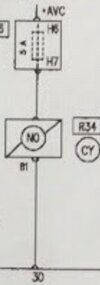
Lots of electrical testing later has revealed that the 5A fuse in the engine bay fuse board blows as soon as the negative battery terminal is connected (ignition fully off). This fuse appears to sit in-line between the Battery Positive and Pin 30 on the ECU harness. To eliminate any other parts of the circuit shorting to ground, while testing this the fuel pump is disconnected. Inertia cutoff is disconnected. Relays are all pulled out.
Multimeter on the 5A fuse holder shows a nice clean 12.38V to the battery + on one side, and a direct to ground continuity on the other side (red wire going to ECU). If I disconnect the ECU harness, that continuity to ground goes away. So question 1, is that expected for it to reach ground through the ECU when the harness is connected?
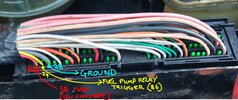
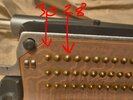
A second observation is that there is continuity through the ECU between pin 30 (our 5A fuse) and pin 28 (ground wire). Which explains why the fuse goes to ground when the harness is connected, the ECU is bridging pin 30 to ground. So question 2....is this also expected?
If the answers to both questions above are "That's expected behaviour" then....why on earth is the ECU causing that 5A fuse to blow as soon as the battery negative is connected?
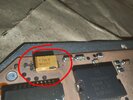
Attached a couple of pictures to sort of show you what I'm on about.
Quick history. 172 Ph1 (2000 year). Car started and ran fine. Left it for a month or so over winter (connected to a trickle maintainer). Went to start it....cranks fine but no fuel. Can't hear the relay clicking or the pump priming. Relays are all tested and working 100%.
Lots of electrical testing later has revealed that the 5A fuse in the engine bay fuse board blows as soon as the negative battery terminal is connected (ignition fully off). This fuse appears to sit in-line between the Battery Positive and Pin 30 on the ECU harness. To eliminate any other parts of the circuit shorting to ground, while testing this the fuel pump is disconnected. Inertia cutoff is disconnected. Relays are all pulled out.
Multimeter on the 5A fuse holder shows a nice clean 12.38V to the battery + on one side, and a direct to ground continuity on the other side (red wire going to ECU). If I disconnect the ECU harness, that continuity to ground goes away. So question 1, is that expected for it to reach ground through the ECU when the harness is connected?
A second observation is that there is continuity through the ECU between pin 30 (our 5A fuse) and pin 28 (ground wire). Which explains why the fuse goes to ground when the harness is connected, the ECU is bridging pin 30 to ground. So question 2....is this also expected?
If the answers to both questions above are "That's expected behaviour" then....why on earth is the ECU causing that 5A fuse to blow as soon as the battery negative is connected?
Attached a couple of pictures to sort of show you what I'm on about.